
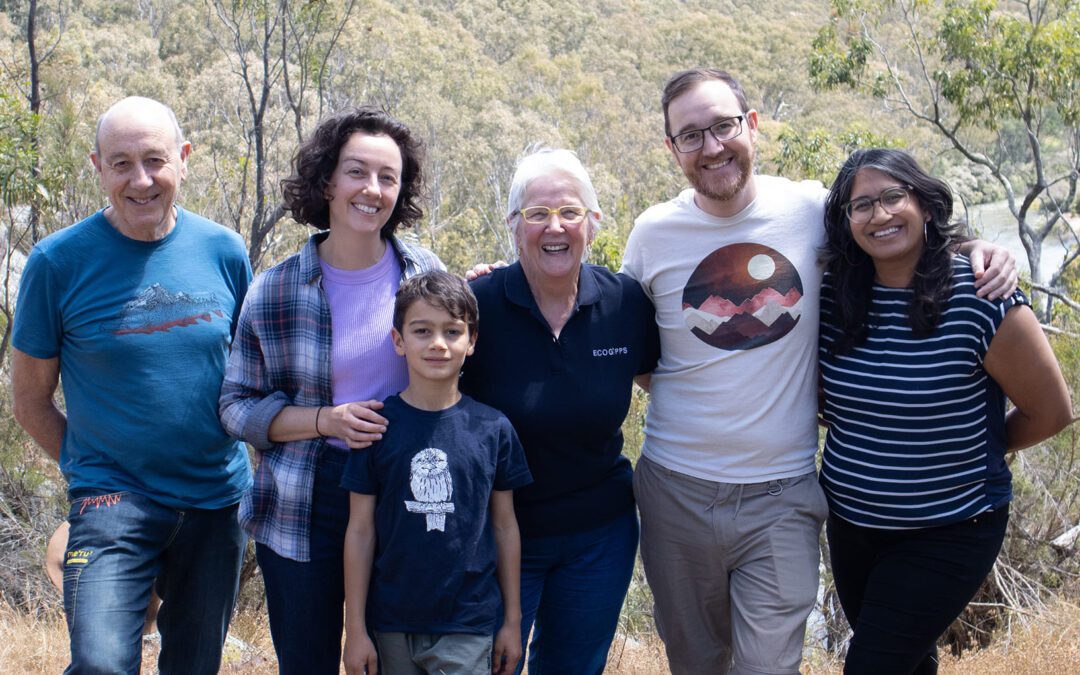
In 2025, the founders of EcoGipps, Jim and Heather Phillipson made the bold decision to donate their 105 hectare North Paddock property to Biodiversity Legacy. This gift is the consolidation of Jim and Heather’s intent to rehabilitate and restore private landholding for protection beyond their life-time. In this Q & A with EcoGipps Stewardship Coordinator, Caroline Trevorrow, Heather reflects upon their journey and her hopes for the future of the North Paddock
What prompted you and Jim to purchase the North Paddock?
Jim and I live across the road from the North Paddock and recognised the important role it plays in our local geography. The North Paddock sits above the surrounding flood plains of the Macalister River and its slopes provide an important refuge for animals and plants in times of flood, leading to the diverse and important ecological value it has today.
The block is bordered on one side by a large area of cleared grazing land, whereas the North Paddock is dominated by stringybark forest, with some swampy scrub areas. Given this, the North Paddock provides a natural corridor for wildlife that joins State reserves to the north and Blores Hill reserve to the south. It was immediately obvious to us that this corridor would be beneficial to local wildlife, bushwalkers and forest lovers alike.
What were your priorities for the block when you first purchased it?
There was a lot of rubbish on the property so removal was a priority. Old car bodies, burnt out caravans and old broken-down farm equipment made up the bulk of it. We quickly recognised that removing these large, heavy pieces would be a big process so we put a call out to local clubs, including the Maffra Motor Museum to see if they would be interested in salvaging any of this equipment. Luckily, they were and ended up taking most of the old equipment.
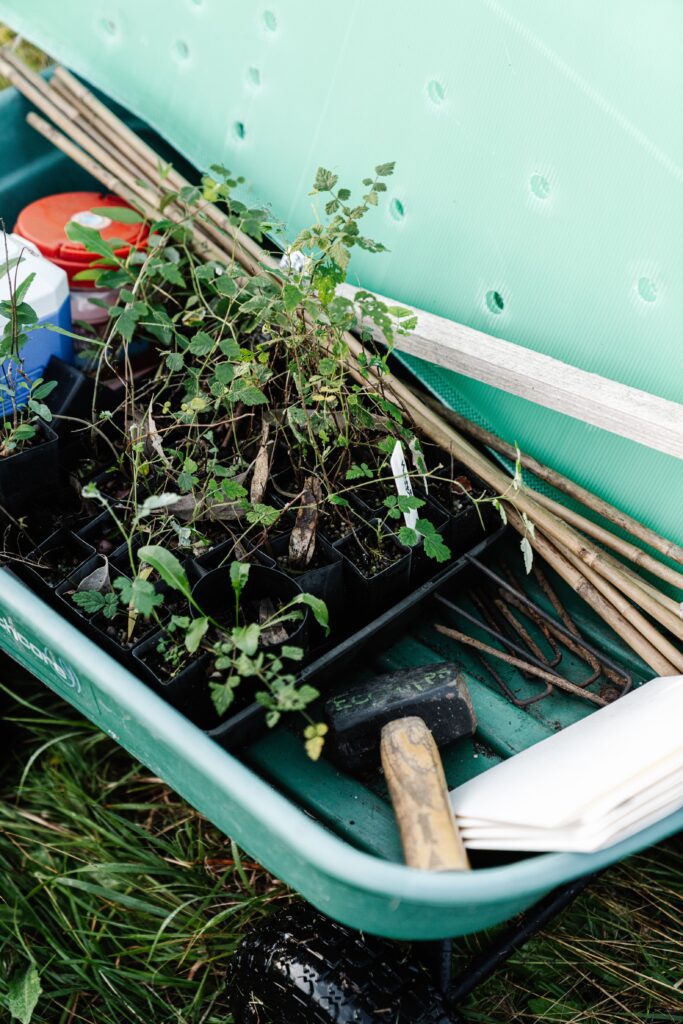
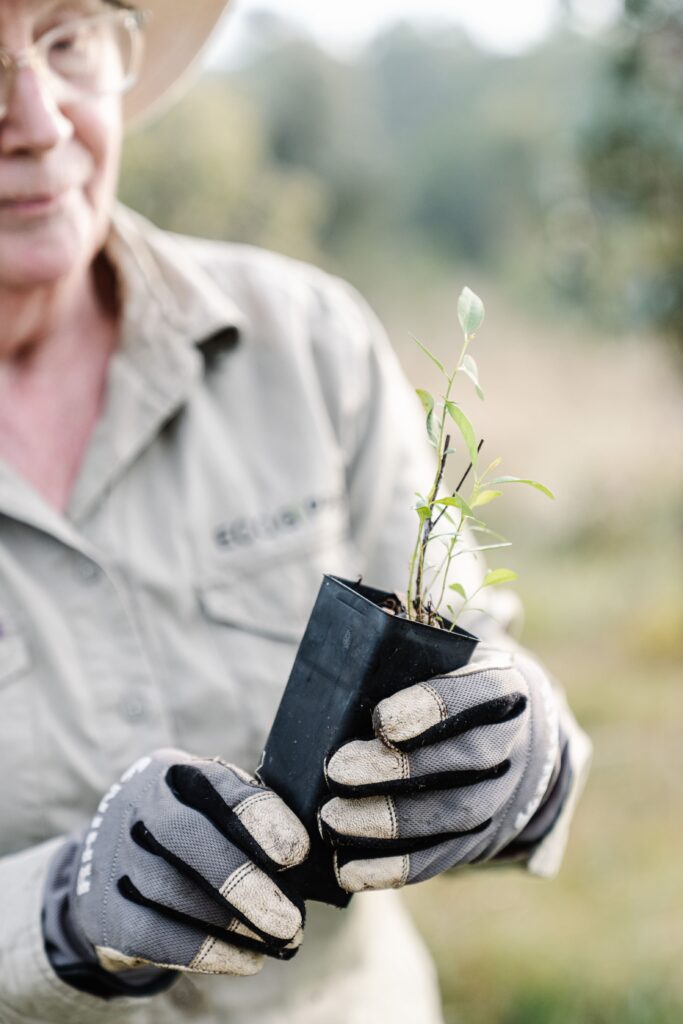
Weed control was another priority. We started with the removal of Boxthorn on the eastern fence line, along with blackberries and thistles which had been brought in by cattle that used to graze here, as well as the local birds. We also removed all of the old, broken internal fences so wildlife could travel safely around the property. Some external fences were also taken down, as I think that this opens up the landscape rather than our eyes being drawn to fence lines and barriers.
How have you noticed the land change since you and Jim took over as landowners of the North Paddock?
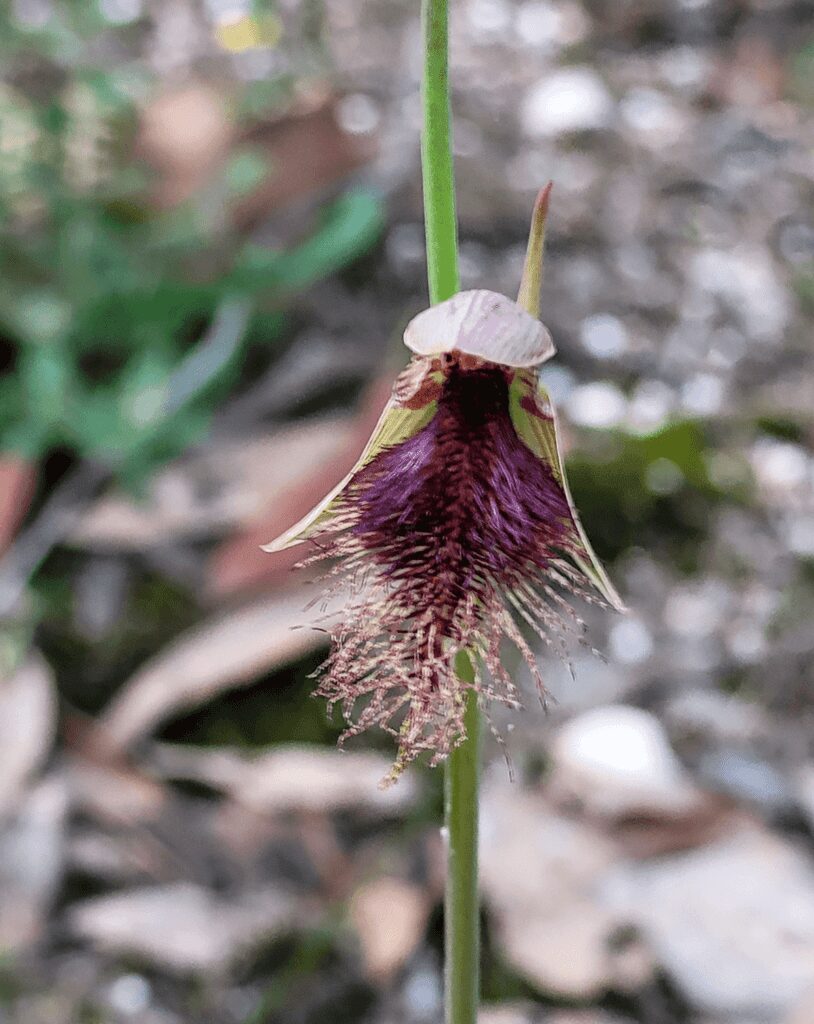
When we first bought the North Paddock, there had been two years of drought and there were plenty of deer on the block. This meant there was minimal understory and no greenery. One day when I was out walking, I noticed a small patch of Hibbertia growing; the only patch of green. Eager to protect it, I installed a tree-guard around the shrub. Now that the deer are being controlled, we’ve noticed more shrubs and groundcover vegetation. I still keep the tree-guard around the Hibbertia to remind me what it was like! After the overlay of invasive species has been removed, landowners need to trust nature to manage itself.
You often get asked how your children feel about the North Paddock being gifted to Biodiversity Legacy. How did you broach this idea with them and were they supportive?
We bought the idea up with our children, David and Kate, over dinner one night. They were bought up in a culture that encouraged a strong connection with nature and respect for the environment. David is a Director for Rendere Environmental Trust and Kate will be a Director for the newly formed EcoGipps Ltd.
Jim and I feel strongly about leaving a legacy that is fair and equitable. David and Kate can still benefit and contribute to the North Paddock through Community Stewardship established by EcoGipps. This creates generational change in land management that we hope will inspire others to consider.
You mentioned EcoGipps developing a Community Stewardship model for the North Paddock. What opportunities does this bring?
It’s important to us to know that we will be leaving the property in good hands and that it will remain a haven of biodiversity forever. Community Stewardship gives us the opportunity to connect with like-minded people, to form a ‘friends’ group who can look after the North Paddock into the future. This might be through local bushwalking clubs doing track maintenance, our local Field Nats doing surveys or other projects that volunteers can participate in to learn more about recording and protecting diverse eco-systems.
Community Stewardship doesn’t have to be complicated; it's about getting the right structures in place from the beginning to ensure the land remains protected, just as Jim and I intended it to be. This is where Biodiversity Legacy comes in to help landowners navigate pathways for setting up Stewardship models. Their expertise in planning, governance and conservation meant we didn’t have to navigate the process alone.
What advice would you give to other landowners who might be considering what the future holds for their properties?
Every bit of land for wildlife is important, no matter how small, it’s important for the health of the environment. Pockets of healthy country all add up to a very significant legacy for future generations.
The North Paddock is located quite close to town, and that provides us with a great opportunity to work closely with the locals. When the community forms close connections with the land, they are more likely to want to protect and nurture it.